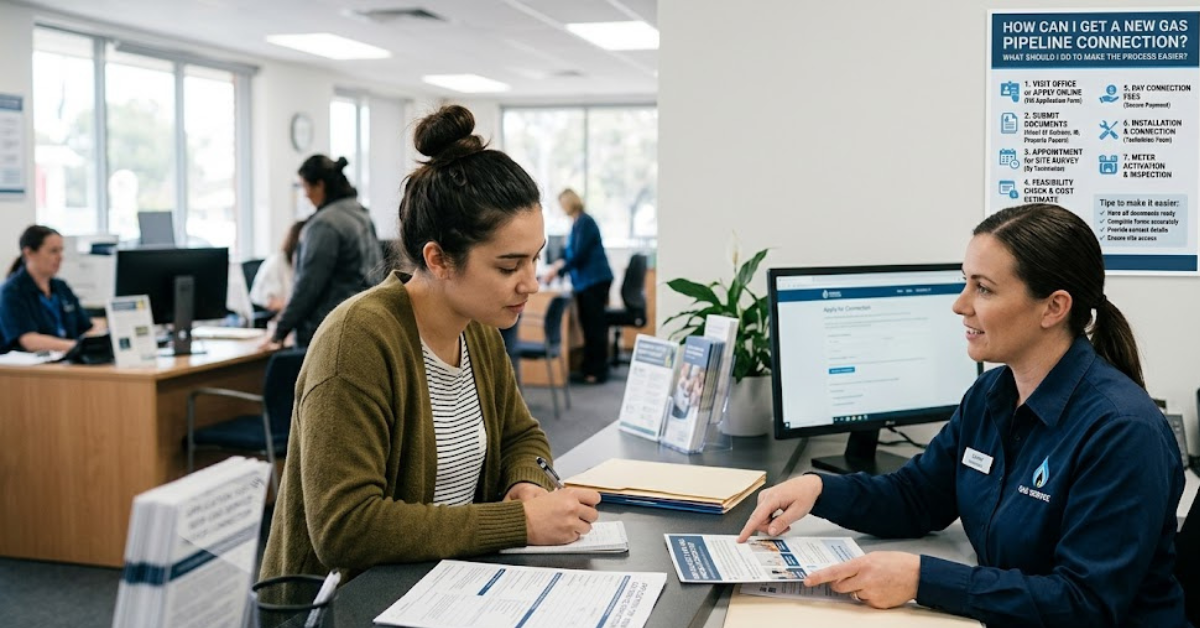
Imagine moving into a new home only to realize you still need a gas connection for cooking, heating, or other household needs. Suddenly, questions start piling up: Which documents are required? How long will approval take? Can the process be sped up?
If you’re wondering, how can i get a new gas pipeline connection? what should i do to make the process easier?, you’re not alone. Thousands of homeowners, tenants, and property developers apply for new gas connections every year, but many encounter delays because they don’t understand the process.
This guide explains everything you need to know—from eligibility requirements and documentation to practical tips that can help you get your gas pipeline connection approved and installed with minimal hassle.
Understanding How a New Gas Pipeline Connection Works
A gas pipeline connection links your property to the local natural gas distribution network. Depending on your location, the service may be provided by a government utility company, municipal authority, or private gas supplier.
The process generally involves:
- Submitting an application
- Verifying eligibility
- Site inspection
- Approval and fee payment
- Pipeline installation
- Meter installation
- Final activation
While procedures vary by region, the overall workflow remains largely similar.
Why Homeowners Apply for Gas Pipeline Connections
Natural gas remains a popular energy source because it offers several benefits:
- Convenient fuel supply
- Continuous availability
- Lower storage requirements than LPG cylinders
- Cost-effective operation in many regions
- Cleaner burning compared to some traditional fuels
Many households prefer pipeline gas because it eliminates the need to regularly order and replace fuel cylinders.
Check Availability Before Applying
Confirm Gas Network Coverage
Before submitting an application, determine whether your area is already connected to the gas distribution network.
Gas companies typically evaluate:
- Distance from existing pipelines
- Neighborhood infrastructure
- Population density
- Service feasibility
If gas infrastructure is unavailable in your area, approval may take significantly longer or may not be immediately possible.
Verify Property Eligibility
Some providers require:
- Legal ownership documentation
- Approved building plans
- Occupancy certificates
- Address verification
Ensuring your property complies with local regulations can prevent unnecessary delays.
Documents Usually Required for a New Gas Connection
One of the most common reasons applications get delayed is incomplete documentation.
Personal Identification Documents
Applicants are typically asked to provide:
- Government-issued photo ID
- National identity card
- Passport (where applicable)
- Driver’s license
Proof of Address
Accepted documents often include:
- Utility bills
- Property tax receipts
- Rental agreements
- Residence certificates
Property Ownership Documents
Depending on local regulations, you may need:
- Sale deed
- Property registration papers
- Lease agreement
- Builder possession letter
Additional Supporting Documents
Some gas utilities may request:
- Passport-sized photographs
- Application forms
- NOC (No Objection Certificate)
- Building approval documents
Preparing these documents in advance can significantly speed up processing.
Step-by-Step Process to Apply for a New Gas Pipeline Connection
Step 1: Submit Your Application
Applications can usually be submitted through:
- Utility offices
- Authorized service centers
- Customer service counters
- Online application portals
Ensure every section of the application form is completed accurately.
Step 2: Document Verification
The utility provider reviews:
- Identity details
- Address records
- Property ownership information
- Eligibility requirements
Missing information often results in delays.
Step 3: Site Inspection
A technician may visit your property to evaluate:
- Access points
- Pipeline routing
- Safety requirements
- Distance from the main gas line
The inspection determines installation feasibility.
Step 4: Approval and Fee Payment
After successful verification, applicants receive approval and fee details.
Charges may include:
- Connection fees
- Security deposits
- Meter installation charges
- Service line costs
Step 5: Installation of Pipeline and Meter
Qualified technicians install:
- Service pipeline
- Pressure regulators
- Gas meter
- Safety valves
This phase may take several days depending on workload and infrastructure conditions.
Step 6: Final Safety Testing
Before activation, technicians conduct safety checks to verify:
- Leak-free installation
- Correct pressure levels
- Meter functionality
- Compliance with safety standards
After approval, gas service becomes operational.
Common Reasons for Delays
Many applicants ask, how can I get a new gas pipeline connection? what should I do to make the process easier?
The answer often lies in avoiding these common mistakes.
Incomplete Documentation
Missing paperwork is among the leading causes of delayed approvals.
Incorrect Information
Small mistakes such as spelling errors, mismatched addresses, or incorrect identification numbers can trigger additional verification requests.
Property Disputes
Ownership disputes or unclear property records may temporarily halt approval.
Infrastructure Limitations
Areas with limited gas network expansion may experience longer waiting periods.
Missed Inspection Appointments
If technicians cannot access the property, inspections must be rescheduled, extending the timeline.
Practical Tips to Make the Process Easier
Prepare Documents Before Applying
Create a folder containing:
- Identity proof
- Address proof
- Property documents
- Application copies
Having everything ready reduces administrative delays.
Apply Through Official Channels
Use authorized offices or approved online systems to avoid misinformation and unnecessary complications.
Keep Copies of Every Submission
Maintain digital and physical copies of:
- Applications
- Payment receipts
- Verification documents
- Correspondence records
This can be helpful if follow-up is required.
Respond Quickly to Requests
If the utility company asks for additional information, provide it promptly.
Fast responses often prevent applications from being placed on hold.
Ensure Property Access
Make sure inspectors and technicians can easily access the installation area during scheduled visits.
Follow Up Politely
Regular status checks help ensure your application remains active without appearing overly aggressive.
Estimated Timeline for a New Gas Connection
Processing times vary depending on location and utility provider.
A typical timeline may look like this:
| Stage | Estimated Time |
| Application Review | 1–2 weeks |
| Site Inspection | 1–3 weeks |
| Approval | 1–2 weeks |
| Installation | 1–4 weeks |
| Activation | A few days |
In well-developed service areas, connections may be completed much faster.
Safety Considerations After Installation
Once your connection becomes active, follow good safety practices.
Schedule Regular Inspections
Routine inspections help identify:
- Leaks
- Corrosion
- Faulty regulators
- Damaged piping
Learn Emergency Procedures
Every household should know:
- How to shut off gas supply
- Emergency contact numbers
- Signs of a gas leak
Maintain Ventilation
Proper ventilation improves safety and appliance efficiency.
Key Takeaways
- Confirm gas service availability before applying.
- Gather all required documents in advance.
- Complete application forms accurately.
- Be available for inspections and installation visits.
- Keep copies of all paperwork and receipts.
- Follow up regularly on application status.
- Prioritize safety after activation.
Frequently Asked Questions
How long does it take to get a new gas pipeline connection?
The process may take anywhere from a few weeks to several months depending on infrastructure availability, inspections, approvals, and local utility workloads.
What documents are required for a new gas connection?
Most providers require identification, proof of address, property ownership documents, and completed application forms.
Can tenants apply for a gas pipeline connection?
In many areas, tenants can apply with the property owner’s consent and supporting lease documentation.
What should I do if my application is delayed?
Contact customer service, verify document status, and ensure no additional information is pending. Delays are often linked to incomplete paperwork or inspection scheduling.
How can I make the gas connection process easier?
Prepare documents early, submit accurate information, respond promptly to requests, and ensure easy access for inspections and installation.
Is a site inspection always required?
Most utility providers conduct inspections to assess safety requirements, installation feasibility, and pipeline routing before approving service.
Conclusion
If you’ve been asking, how can i get a new gas pipeline connection? what should i do to make the process easier?, the answer is straightforward: prepare thoroughly, submit accurate documentation, and stay proactive throughout the process.
Most delays occur because of incomplete paperwork, missed inspections, or eligibility issues—not because the process itself is overly complicated. By understanding the requirements ahead of time and maintaining clear communication with your gas provider, you can significantly improve your chances of a smooth and timely installation.
Take the time to gather your documents, confirm service availability, and follow the recommended steps. A little preparation today can save weeks of waiting later.
Leave a Reply