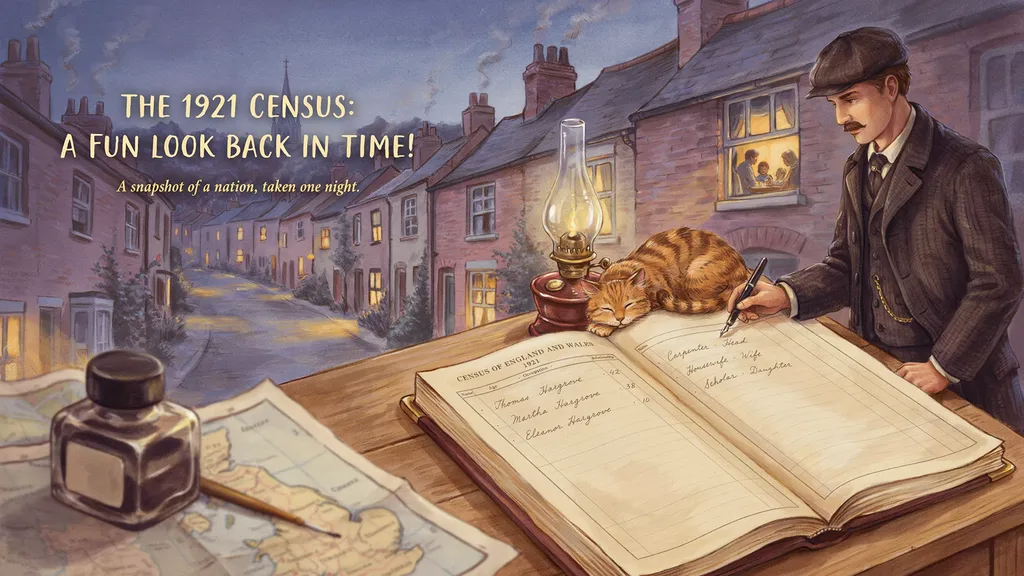
Imagine a giant snapshot of an entire country taken on a single night. That is what the 1921 Census is all about! Over a hundred years ago, people went from door to door in England and Wales. They asked every single family to write down who was in their home. It was like taking a massive group photo, but with words and numbers instead of a camera. This special record tells us who lived next door to each other, how many kids were in a family, and even what jobs people had to earn money. Historians love looking at the 1921 census because it gives us a clear window into the past. It shows us how everyday people lived right after a very big war. When I first looked at an old page from the 1921 census, I was amazed by the neat handwriting and the tiny details about normal houses. It makes history feel so real and close to home, almost like talking to a great-great-grandparent about their very first job or their favorite pet dog running in the yard.
Why Do We Keep These Old Records?
Old papers might look dusty and boring, but they are actually hidden treasure chests! The 1921 census helps us understand the story of our own families. If your great-grandma was alive back then, her name might be written right there on the official sheet. We keep the 1921 census safe in big national archives so that anyone can search for their roots. It is like a giant puzzle piece for building a family tree. Without the 1921 census, we would miss a huge chunk of our history. It lets us trace how people moved from small towns to big cities to find work in factories or shops. Every time I help a friend look up their ancestors in the 1921 census, it feels like going on a real treasure hunt. You never know what fun fact you might find, like someone having a very unusual job or living in a house with ten other people! These records prove that every single person counts and leaves a little mark in the history books for us to discover today.
How Did the Count Work?
Doing a massive count of everyone in a country is super hard work. For the 1921 census, the government printed millions of paper forms. They handed these forms to the head of every household a few days before the big date. On the night of June 19, 1921, every family had to write down everyone sleeping under their roof. You had to list names, ages, jobs, and where you were born. The next day, workers collected all those papers by hand. Reading through how they managed the 1921 census shows an incredible amount of teamwork and planning. There were no computers or smartphones back then. Everything relied on sharp pencils, paper pads, and people walking miles across towns and hills. Thinking about the 1921 census makes me appreciate how much effort goes into simple data collection. It was a huge community effort where everyone had to do their small part to make the big picture complete and accurate for the whole nation to see.
Life Right After the War
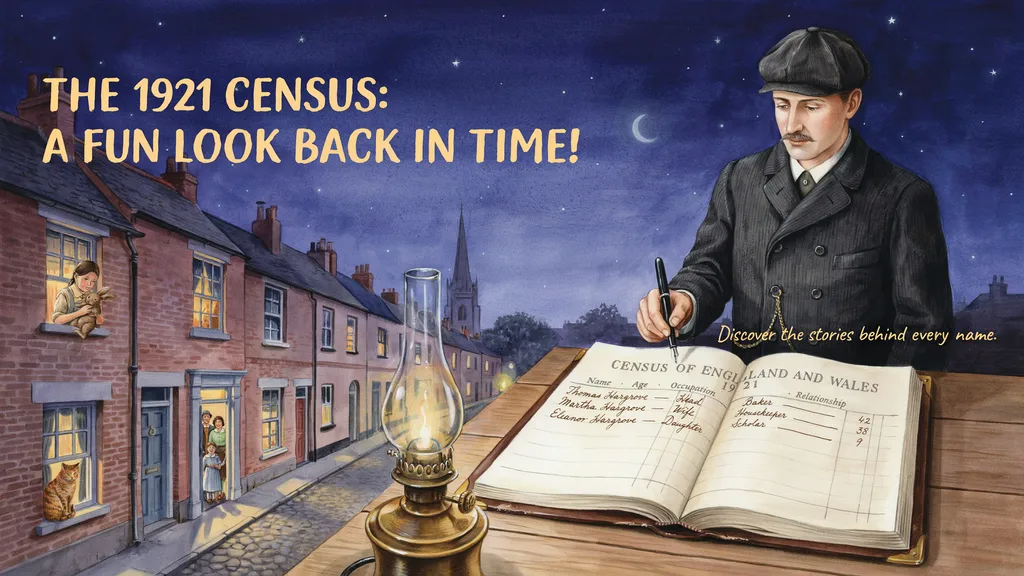
The world was changing fast when the 1921 census took place. People were trying to get back to normal after a very difficult global conflict. Many families had lost loved ones, and things looked very different on the streets. The 1921 census captures this exact moment of healing and starting over. You can see many households led by women because so many men did not come home from the fighting. This part of the 1921 census always touches my heart. It shows the incredible strength of everyday people who kept going no matter what happened. They rebuilt their homes, found new jobs, and took care of each other. Looking at the 1921 census reminds us that hope can grow even after hard times. It tells a human story of survival and community spirit. History is not just about kings and queens in big castles; it is about regular folks making a new start on sunny summer mornings just like we do today.
Where Did People Work?
Jobs tell us a lot about how a society functions. In the 1921 census, you can find people working in coal mines, running small bakeries, or driving horse-drawn carts. The types of jobs listed in the 1921 census show a mix of old-fashioned trades and brand-new industries. Some folks worked long hours in giant textile mills, while others delivered milk or taught children in local schoolhouses. When exploring the 1921 census, I always look at the occupation column first. It paints such a vivid picture of the daily grind a century ago. You might find a relative who was a chimney sweep or a piano maker! The 1921 census proves that work was tough and started at a very young age for many teenagers. Comparing those old jobs to the digital careers we have today is a fun way to see how much our daily routines have transformed over the last one hundred years of human progress.
Who Lived in the House?
Houses back then were quite busy places! When you open the 1921 census, you often see multiple generations living under one roof. Grandparents, aunts, uncles, and cousins all shared small spaces together. Sometimes, families even took in lodgers to help pay the rent. The 1921 census reveals these tight-knit living arrangements very clearly. It is super different from how many people live today in separate apartments or big suburban homes. Reading the household section of the 1921 census makes you realize how much families depended on each other for daily support and company. Sharing a kitchen with ten other people sounds wild to us now, but it was totally normal back then. The 1921 census shows us that community and sharing were the secret keys to making life work during times when money was tight and homes were small.
Secrets in the Handwriting
One of the coolest parts of viewing the original documents from the 1921 census is seeing the actual ink on the page. You see crossed-out words, spelling mistakes, and fancy cursive writing. The people filling out the 1921 census did not know their notes would be looked at by grandkids a century later. Sometimes the handwriting in the 1921 census is super messy and hard to read, like a doctor’s prescription! That makes decoding it feel like a secret spy mission. I spent an afternoon trying to read a single line in the 1921 census once, and when I finally figured out the surname, I did a happy little dance. It connects you directly to the person who held that pen so long ago. These little human errors and messy ink blots in the 1921 census remind us that history was written by real, imperfect people living real lives.
A Peek at Childhood
What was it like to be a kid a hundred years ago? The 1921 census gives us a hint by showing how many children were in each family and how old they were when they started working. Many kids listed in the 1921 census left school early to help their parents earn extra coins for food and coal. Looking at the ages of children in the 1921 census makes me very grateful for modern schools and playgrounds. Back then, childhood ended much faster. Kids played simpler street games, but they also carried big responsibilities at home. Examining a youth entry in the 1921 census helps young students today understand that their peers from the past worked hard just to help out. It is a wonderful teaching tool that shows how much better life has become for kids in terms of education, safety, and having time to just play and be silly.
Finding Lost Relatives
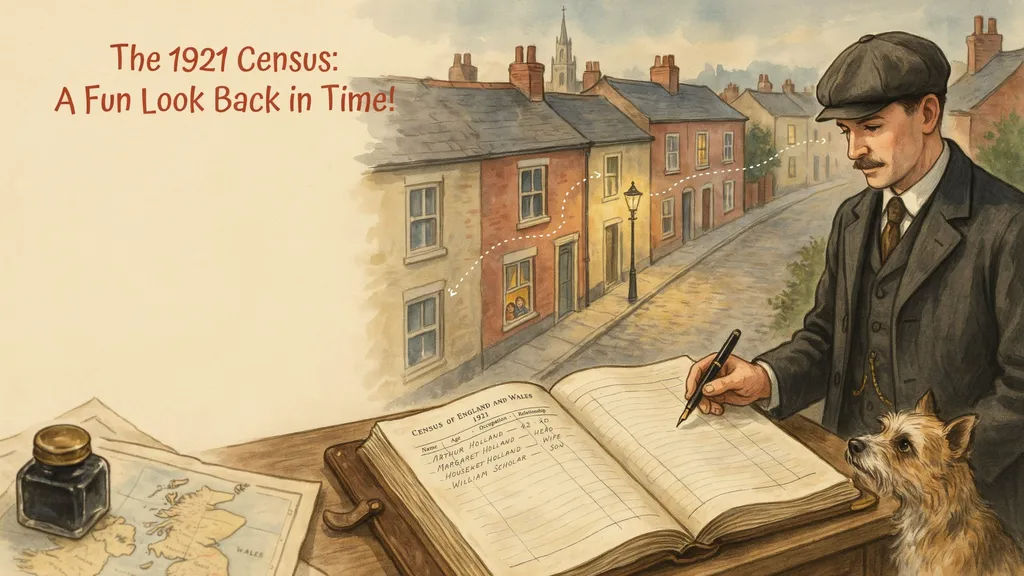
Genealogy is a huge hobby for millions of people around the globe. Using the 1921 census is one of the best ways to break through a brick wall in your family research. If you get stuck trying to find an ancestor who vanished between decades, the 1921 census acts as the ultimate bridge. It connects the 1911 records to the later years seamlessly. Searching through the digital indexes of the 1921 census is super fast and user-friendly now. You just type a name into a search box, and boom, the old document pops up on your screen. Whenever I introduce a friend to the magic of the 1921 census, their eyes light up with wonder. It transforms a boring list of names into a living, breathing family story. Finding a long-lost great-uncle in the 1921 census feels like unearthing a buried time capsule right in your own living room.
The Big Picture of Society
All these individual forms add up to something truly massive. The 1921 census provides statisticians with a grand overview of population shifts, health trends, and housing quality a century ago. Governments use the data from the 1921 census to study how societies recover from major crises. It shows where people thrived and where communities struggled. Reviewing the overarching reports attached to the 1921 census gives us deep sociological insights without needing a heavy textbook. It is pure facts and figures brought to life by human stories. Understanding the 1921 census helps modern planners see patterns that still matter today, like urban growth and family support networks. It proves that counting people is not just about numbers on a grid; it is about knowing who we are, where we came from, and how we can build a brighter, fairer future for everyone in our neighborhoods.
Key Details Comparison
| Feature | Details from the Count | Modern Equivalent |
| Format | Hand-written paper forms | Digital online databases |
| Collection | Door-to-door by local workers | Secure online submissions |
| Lighting | Gas lamps and candles | Electric lights everywhere |
| Travel | Walking, horses, and steam trains | Cars, buses, and fast planes |
| Communication | Letters and telegrams | Smartphones and internet |
Frequently Asked Questions
What is the 1921 census?
It is an official count of all people living in England and Wales on a specific night in June 1921, recording names, ages, and jobs.
Why is the 1921 census important?
It helps people build family trees and gives historians a clear look at how society lived right after a major world war.
Can anyone look at the 1921 census?
Yes, the public can search the digital archives to find old family records and see original handwritten household forms.
How often is a census taken?
Usually, a big national census happens every ten years so the government can keep track of population changes over time.
What kind of questions were asked?
People had to write down their name, age, where they were born, who they lived with, and what job they did.
Is the handwriting hard to read?
Sometimes! Because people wrote with ink pens a hundred years ago, some words can look messy or tricky to decode.
Conclusion
Taking a journey back in time with the 1921 census is a fantastic adventure that connects us all to our shared human roots. These old pages remind us of the strength, hard work, and daily joys of the people who came before us. Why not start your own family history adventure today and see what fascinating stories are waiting for you in the archives?
Leave a Reply