Imagine spending a significant amount of money on what is advertised as a luxurious Pashmina shawl, only to discover later that it’s made from synthetic fibers or ordinary wool. Unfortunately, this happens more often than many shoppers realize.
If you’re wondering how to identify if the pashmina shawl i am buying is genuine?, you’re asking an important question. Genuine Pashmina is one of the world’s most prized textiles, known for its incredible softness, warmth, craftsmanship, and heritage. However, because authentic Pashmina commands premium prices, the market is flooded with imitations.
In this guide, you’ll learn what real Pashmina is, why it is valuable, the key signs of authenticity, common scams to avoid, and practical ways to ensure you’re investing in a genuine shawl.
What Is Genuine Pashmina?
Before learning how to identify an authentic shawl, it’s important to understand what Pashmina actually is.
Pashmina comes from the fine undercoat fibers of the Changthangi Goat, also known as the Pashmina goat. These goats live in the high-altitude regions of Ladakh and neighboring Himalayan areas, where extreme winter temperatures help produce exceptionally fine wool.
The fibers are:
- Extremely soft
- Lightweight
- Naturally insulating
- Rare and difficult to harvest
Authentic Pashmina shawls are traditionally hand-spun and handwoven by skilled artisans, particularly in Kashmir.
Why Genuine Pashmina Is So Valuable
Many shoppers are surprised by the cost of authentic Pashmina.
Several factors contribute to its value:
- Limited fiber production
- Labor-intensive collection process
- Traditional handcrafting techniques
- Exceptional softness and warmth
- Cultural and artistic heritage
A genuine Pashmina shawl may take weeks or even months to complete, depending on the design and weaving complexity.
Understanding Common Pashmina Imitations
One reason buyers ask, how to identify if the pashmina shawl i am buying is genuine?, is because counterfeit products are widely available.
Common substitutes include:
- Viscose blends
- Acrylic fabrics
- Synthetic fibers
- Ordinary wool
- Cashmere blends marketed as Pashmina
While some alternatives may feel soft initially, they typically lack the unique characteristics of authentic Pashmina.
Check the Fiber Composition
Read the Label Carefully
The first step is examining the product description and fiber content.
Be cautious of labels that say:
- “Pashmina blend”
- “Pashmina feel”
- “Pashmina style”
- “Pashmina scarf”
These descriptions often indicate the product is not pure Pashmina.
A genuine shawl should clearly specify authentic Pashmina or certified Pashmina wool.
Understand Blended Products
Some high-quality shawls combine:
- Pashmina and silk
- Pashmina and cashmere
These can still be valuable products, but they are not the same as pure Pashmina.
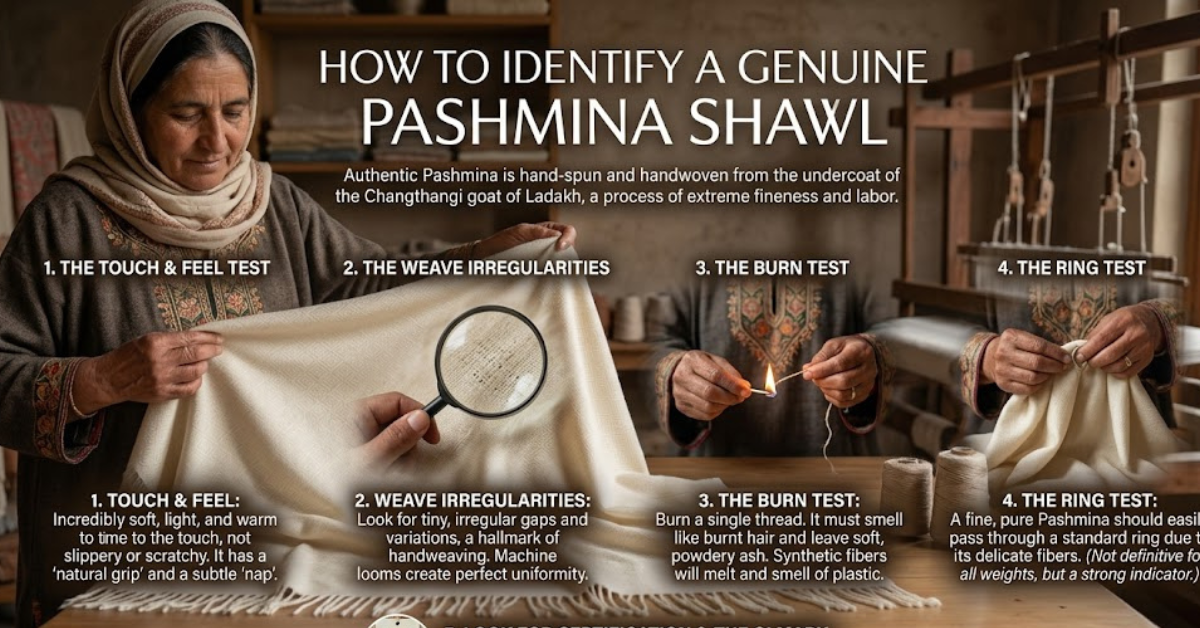
Examine the Texture and Feel
Genuine Pashmina Feels Soft, Not Slippery
Authentic Pashmina has a distinct texture.
It feels:
- Soft and warm
- Smooth but not overly silky
- Lightweight yet substantial
Synthetic fabrics often feel excessively slick or shiny.
Warmth Test
One remarkable characteristic of genuine Pashmina is its warmth.
Even a thin shawl provides significant insulation due to the natural properties of the fibers.
If a lightweight shawl feels unusually cold or lacks warmth, it may not be authentic.
Look Closely at the Weave
Slight Irregularities Are Normal
Handwoven Pashmina often contains subtle imperfections.
These may include:
- Minor weave variations
- Tiny inconsistencies
- Slight irregular thread spacing
These features are signs of handcrafted production rather than flaws.
Perfect Uniformity Can Be a Warning Sign
Machine-made products often display:
- Extremely uniform weaving
- Identical thread patterns
- Perfectly consistent texture
While attractive, such perfection can sometimes indicate mass production.
Check the Weight and Drape
Lightweight but Not Fragile
Authentic Pashmina is known for its excellent strength-to-weight ratio.
A genuine shawl should:
- Feel light
- Drape naturally
- Flow smoothly when worn
Heavy or stiff fabrics may suggest alternative materials.
Observe Natural Movement
When held loosely, authentic Pashmina tends to fall gracefully and conform naturally to body contours.
Examine the Surface Fibers
Slight Fuzziness Is Natural
Real Pashmina fibers are extremely fine and delicate.
As a result, authentic shawls may display:
- A soft halo effect
- Fine surface fibers
- Gentle texture variations
Completely smooth surfaces may indicate synthetic manufacturing.
Assess the Price Realistically
Genuine Pashmina Is Rare
One of the easiest ways to avoid scams is understanding realistic pricing.
Because of:
- Limited raw material supply
- Skilled craftsmanship
- Labor-intensive production
Authentic Pashmina rarely sells at extremely low prices.
Beware of “Too Good to Be True” Deals
A seller claiming to offer pure handcrafted Pashmina at a fraction of market value should raise concerns.
While discounts exist, unusually cheap products often signal imitation materials.
Look for Certification and Authenticity Marks
Certification Can Increase Confidence
Some manufacturers and cooperatives provide authenticity certificates or labeling programs that verify the origin and composition of the shawl.
Although certification isn’t the sole indicator of authenticity, it can provide additional reassurance.
Ask Questions
A reputable seller should be able to explain:
- Fiber source
- Production methods
- Weaving process
- Material composition
Vague answers can be a warning sign.
Perform the Ring Test Carefully
What Is the Ring Test?
A popular method involves passing the shawl through a ring.
Because genuine Pashmina fibers are extremely fine, many authentic shawls can pass through a relatively small ring.
Understand Its Limitations
The ring test alone cannot confirm authenticity.
Some imitation fabrics can also pass the test, making it only one piece of the evaluation process.
Compare Genuine Pashmina and Fake Alternatives
| Feature | Genuine Pashmina | Synthetic Imitation |
| Warmth | Excellent | Moderate |
| Texture | Soft and natural | Often slippery |
| Weight | Lightweight | Varies |
| Breathability | High | Lower |
| Durability | Strong despite softness | Depends on material |
| Price | Premium | Usually cheaper |
Common Mistakes Buyers Make
Focusing Only on Softness
Many synthetic fabrics can feel soft initially.
Softness alone is not proof of authenticity.
Trusting Marketing Terms
Words like:
- Luxury Pashmina
- Premium Pashmina
- Pashmina-style
do not guarantee genuine material.
Ignoring Seller Reputation
Researching the seller often provides valuable clues about product authenticity.
Practical Buying Tips
Before Purchasing
Ask:
- Is the shawl pure Pashmina or blended?
- Where was it produced?
- Is there authenticity documentation?
- What is the fiber source?
During Inspection
Check:
- Weave quality
- Surface texture
- Warmth
- Drape
- Fiber composition
The more factors you evaluate, the more confident your decision becomes.
Key Takeaways
- Genuine Pashmina comes from the undercoat of Changthangi goats.
- Authentic shawls are lightweight, warm, and exceptionally soft.
- Extremely low prices often indicate imitation products.
- Examine texture, weave, drape, and labeling carefully.
- Certification and seller transparency can help verify authenticity.
- Avoid relying on a single test when evaluating a shawl.
Frequently Asked Questions
How to identify if the Pashmina shawl I am buying is genuine?
Look at the fiber composition, texture, warmth, weave quality, price, and seller credibility. Evaluating multiple factors provides the most reliable assessment.
Does genuine Pashmina feel extremely soft?
Yes, but softness alone isn’t enough to confirm authenticity. Many synthetic materials are designed to mimic the feel of real Pashmina.
Can authentic Pashmina be machine-made?
Traditional Pashmina is typically hand-spun and handwoven. Some modern production methods exist, but handcrafted pieces remain highly valued.
Why is genuine Pashmina so expensive?
The rarity of the fibers, difficult harvesting process, and skilled craftsmanship contribute to the premium price.
Is the ring test reliable for identifying Pashmina?
The ring test can be helpful, but it should never be used as the sole method of verification because some imitation fabrics can produce similar results.
What is the biggest sign of fake Pashmina?
Unusually low prices combined with vague labeling and unclear material descriptions are among the most common warning signs.
Conclusion
If you’ve been asking, how to identify if the pashmina shawl i am buying is genuine?, the key is to approach the purchase with knowledge and patience. Authentic Pashmina is a remarkable natural fiber with a rich heritage, and its quality is reflected in its softness, warmth, craftsmanship, and value.
Rather than relying on a single test or marketing claim, evaluate the shawl’s composition, texture, weave, price, and source together. The more informed you are, the easier it becomes to distinguish genuine Pashmina from imitations.
A little extra research before buying can help ensure that the shawl you choose is not only beautiful but also truly authentic.
Leave a Reply