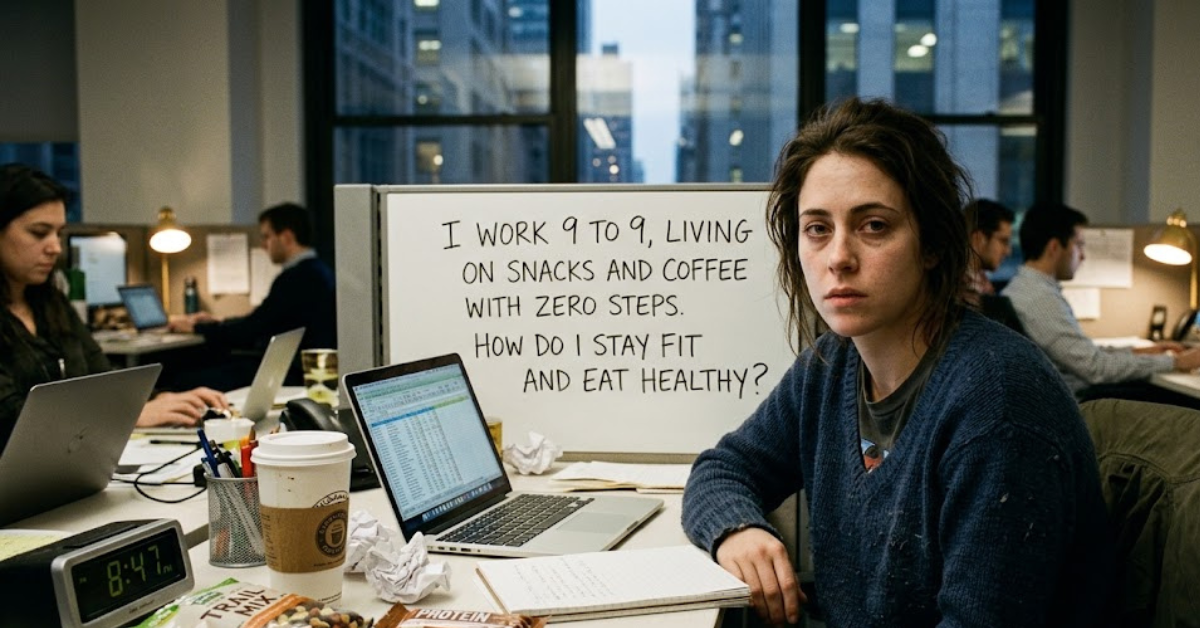
It’s 10 a.m., and you’ve already had two cups of coffee. Lunch becomes a packet of chips between meetings. By evening, you’re exhausted, sitting for the twelfth straight hour, and the idea of exercising feels impossible. If this sounds familiar, you’re probably asking yourself: i work 9 to 9, living on snacks and coffee with zero steps. how do i stay fit and eat healthy?
You’re not alone. Long workdays, constant deadlines, remote work setups, and sedentary lifestyles have made it increasingly difficult for many professionals to prioritize their health. The good news? You don’t need a perfect diet, a two-hour gym routine, or thousands of daily steps to start feeling better.
This guide explores realistic strategies to improve nutrition, increase physical activity, manage energy levels, and stay healthy—even when your schedule seems packed from morning to night.
Why Long Work Hours Can Harm Your Health
Working 12-hour days doesn’t automatically lead to poor health. The problem is often the habits that accompany those hours.
Common challenges include:
- Excessive sitting
- Frequent caffeine consumption
- Skipping meals
- Reliance on processed snacks
- Poor sleep quality
- Limited physical activity
- Increased stress levels
Over time, these behaviors may contribute to:
- Weight gain
- Fatigue
- Digestive issues
- High blood pressure
- Reduced fitness levels
- Burnout
The goal isn’t perfection—it’s building healthier habits that fit into your reality.
Stop Thinking “All or Nothing”
One of the biggest mistakes busy professionals make is assuming fitness requires major lifestyle changes.
In reality, small improvements often produce meaningful results.
Instead of aiming for:
- A strict diet
- Daily gym sessions
- 15,000 steps overnight
Focus on:
- Better food choices
- More movement throughout the day
- Consistency over intensity
Health improvements happen through repetition, not dramatic overhauls.
Build a Smarter Nutrition Strategy
Prioritize Protein at Every Meal
Protein helps:
- Increase fullness
- Support muscle maintenance
- Stabilize energy levels
- Reduce excessive snacking
Simple protein options include:
- Eggs
- Greek yogurt
- Cottage cheese
- Chicken
- Fish
- Lentils
- Beans
- Tofu
A protein-rich breakfast can significantly reduce cravings later in the day.
Upgrade Your Snack Choices
If snacks are unavoidable, make them work for you.
Instead of:
- Candy
- Sugary pastries
- Fried snacks
Choose:
- Mixed nuts
- Fruit
- Roasted chickpeas
- Protein bars
- Yogurt
- Boiled eggs
Healthy snacks help maintain energy without causing dramatic blood sugar crashes.
Don’t Skip Meals
Many people working long hours unintentionally under-eat during the day and overeat at night.
Try maintaining a simple schedule:
- Breakfast
- Lunch
- Afternoon snack
- Dinner
Regular meals often improve energy and concentration.
Manage Coffee Without Depending on It
Coffee Isn’t the Enemy
Coffee itself can be part of a healthy lifestyle.
The issue arises when it becomes a substitute for:
- Sleep
- Water
- Proper meals
Set Practical Limits
Most adults benefit from moderation.
Consider:
- Limiting coffee after mid-afternoon
- Drinking water between cups
- Avoiding sugary coffee drinks
Many people discover that better hydration reduces their need for excessive caffeine.
Increase Daily Movement Without Going to the Gym
When people ask, “i work 9 to 9, living on snacks and coffee with zero steps. how do i stay fit and eat healthy?”, movement is often the missing piece.
Fortunately, exercise doesn’t require a gym membership.
Follow the 5-Minute Rule
Every hour:
- Stand up
- Stretch
- Walk briefly
- Move around your workspace
Even five minutes of movement can break up long periods of sitting.
Take Walking Calls
Phone meetings are excellent opportunities to move.
Walking during calls can:
- Increase daily step counts
- Improve focus
- Reduce stiffness
Small walks add up quickly.
Use Stairs Whenever Possible
Choosing stairs over elevators creates additional activity without requiring extra time.
These micro-workouts can contribute significantly over weeks and months.
Create a Realistic Exercise Routine
Start With 15–20 Minutes
Many busy professionals avoid exercise because they think workouts must be long.
That’s simply not true.
Even 15–20 minutes can improve:
- Cardiovascular health
- Mood
- Energy
- Fitness levels
Focus on Compound Movements
Efficient exercises include:
- Squats
- Push-ups
- Lunges
- Planks
- Rows
- Glute bridges
These movements train multiple muscle groups simultaneously.
Try Three Weekly Sessions
A simple schedule:
- Monday: Strength training
- Wednesday: Strength training
- Saturday: Walking or cycling
This is often enough to create noticeable improvements.
Protect Your Sleep at All Costs
Sleep Affects Everything
Poor sleep can increase:
- Hunger
- Cravings
- Stress
- Fatigue
It also makes healthy habits harder to maintain.
Improve Sleep Quality
Consider:
- Consistent sleep times
- Reduced screen exposure before bed
- Limiting late caffeine intake
- Keeping the bedroom cool and dark
Sleep is often the highest-return health investment available.
Stay Hydrated Throughout the Day
Many people confuse dehydration with hunger or fatigue.
Aim to:
- Keep a water bottle nearby
- Drink water regularly
- Hydrate before reaching for another coffee
Better hydration can improve concentration and energy levels.
Reduce the Impact of Sitting All Day
Why Sitting Matters
Extended sitting is associated with:
- Reduced calorie expenditure
- Muscle inactivity
- Poor posture
- Lower circulation
Counteract Sitting With Movement Snacks
Movement snacks are short bursts of activity.
Examples include:
- 10 squats
- A quick walk
- Stretching
- Climbing stairs
These brief sessions help offset prolonged sedentary periods.
Meal Prep for Busy Workweeks
Remove Decision Fatigue
When healthy food is available, you’re more likely to eat it.
Prepare:
- Protein sources
- Cut vegetables
- Fruit portions
- Healthy snacks
on weekends or less busy evenings.
Keep Emergency Foods Available
Store easy options such as:
- Nuts
- Protein shakes
- Whole-grain crackers
- Fruit
This reduces reliance on vending machines and fast food.
A Sample Day for a Busy Professional
Morning
- Protein-rich breakfast
- Coffee
- Water
Mid-Morning
- Brief walk
- Healthy snack
Lunch
- Lean protein
- Vegetables
- Whole grains
Afternoon
- Water
- Fruit or nuts
- Standing break
Evening
- 20-minute workout
- Balanced dinner
- Reduced screen time before bed
This isn’t a perfect plan—but it’s realistic.
Mental Health Matters Too
Long work hours affect more than physical health.
Chronic stress can contribute to:
- Emotional eating
- Poor sleep
- Reduced motivation
Simple stress-management tools include:
- Deep breathing
- Walking outdoors
- Meditation
- Social connection
- Hobbies
Physical and mental health work together.
Key Takeaways
- Small habits outperform extreme health plans.
- Prioritize protein and nutrient-dense foods.
- Replace some processed snacks with healthier options.
- Stay hydrated and avoid relying solely on coffee.
- Incorporate movement throughout the day.
- Aim for short, realistic workouts.
- Protect sleep as aggressively as you protect work deadlines.
- Consistency matters more than perfection.
Frequently Asked Questions
I work 9 to 9, living on snacks and coffee with zero steps. How do I stay fit and eat healthy without a gym?
Focus on daily movement, walking breaks, bodyweight exercises, and healthier food choices. Small actions performed consistently can make a significant difference.
How many steps should I aim for if I sit all day?
While 10,000 steps is often mentioned, any increase from your current level is beneficial. Start by adding 2,000–3,000 extra steps and build gradually.
Is coffee bad if I work long hours?
Coffee can be part of a healthy routine when consumed in moderation. Problems typically arise when it replaces meals, hydration, or adequate sleep.
What are the best healthy snacks for office workers?
Good options include nuts, fruit, Greek yogurt, boiled eggs, roasted chickpeas, and protein-rich snacks that provide sustained energy.
Can I get fit with only 20 minutes of exercise?
Yes. Short, focused workouts performed consistently can improve strength, fitness, and overall health, especially for previously inactive individuals.
How can I avoid weight gain while working long hours?
Prioritize whole foods, increase daily movement, maintain regular meal patterns, manage stress, and ensure adequate sleep.
Conclusion
If you’ve been thinking, “i work 9 to 9, living on snacks and coffee with zero steps. how do i stay fit and eat healthy?”, remember that you don’t need a complete lifestyle overhaul to improve your health.
Start with manageable changes: drink more water, choose better snacks, move more throughout the day, prioritize sleep, and incorporate short workouts into your weekly routine. These simple habits can have a surprisingly powerful impact on your energy, fitness, and overall well-being.
The key isn’t finding more hours in the day—it’s making better use of the small opportunities that already exist. Start with one change today, build consistency, and let those small wins compound over time.
Leave a Reply