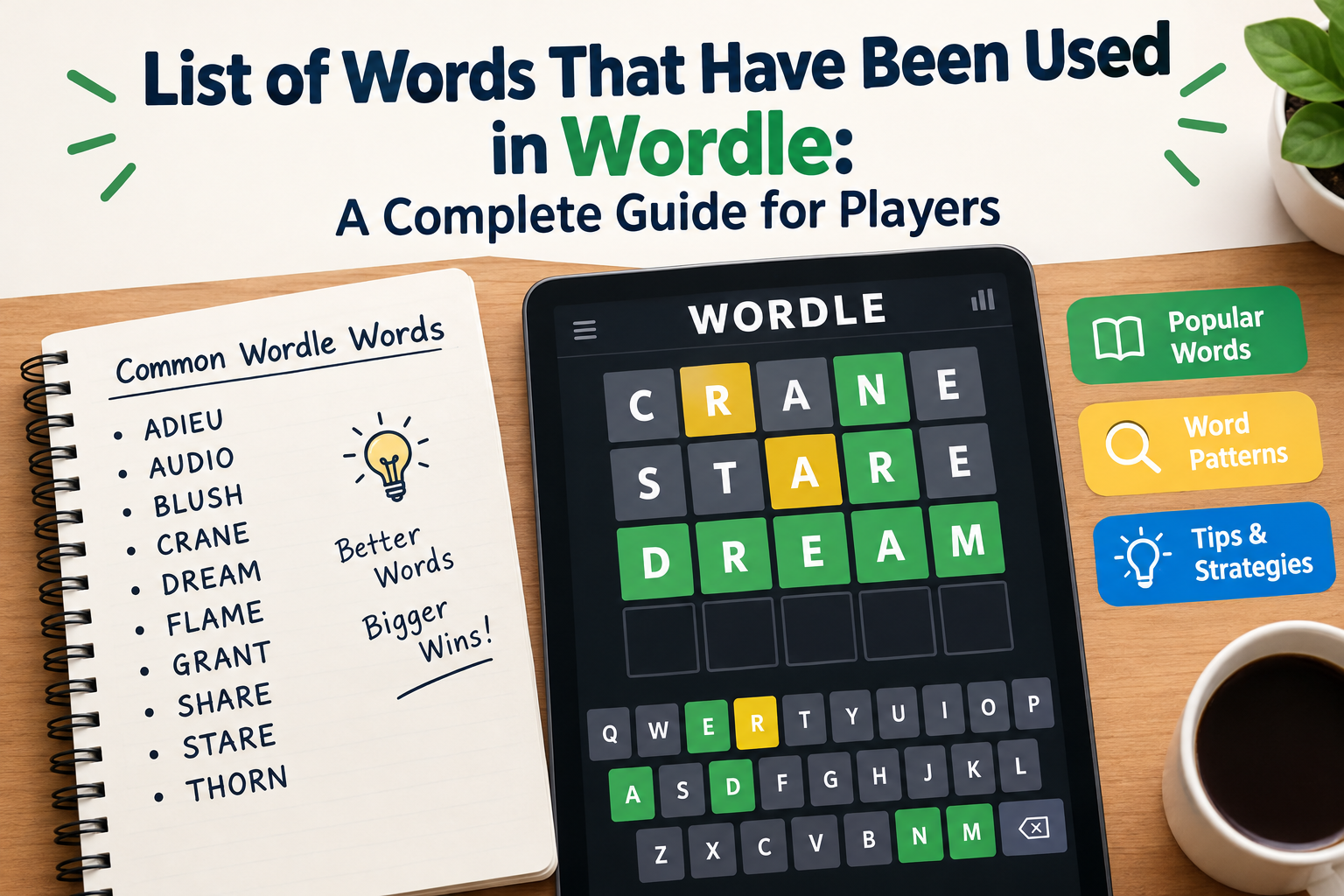
Wordle has become a favorite daily puzzle for people who enjoy word games. Its simple rules make it easy to learn, but finding the correct answer can still be challenging. Many players search for a list of words that have been used in Wordle to review older puzzles, improve their guesses, or avoid repeating familiar answers.
Past answers can also help you understand how the game chooses its five-letter words. You may notice common letters, repeated letters, and words with unusual spelling patterns. These clues can make future puzzles easier to solve.
In this guide, you will learn how to explore previous Wordle answers, understand word lists, and use past solutions wisely. You will also discover useful strategies for building your vocabulary. Whether you are a beginner or an experienced player, this article will help you enjoy Wordle with greater confidence.
1. What Is Wordle?
Wordle is a popular word puzzle in which players try to guess a hidden five-letter word. Each puzzle gives you up to six attempts to find the correct answer. After every guess, the game uses colors to show how close you are.
A green tile means the letter is correct and in the right position. A yellow tile means the letter appears in the answer but belongs somewhere else. A gray tile usually means the letter does not appear in the answer. These clues help you narrow down your choices. The game is easy to understand, but each puzzle requires careful thinking. Players often use vocabulary, spelling knowledge, and logic together. Looking at older answers can also help you recognize patterns and become a better solver.
2. Why Players Search for Previous Wordle Answers
Many players look for a list of words that have been used in Wordle because they want to understand the game’s answer history. Some enjoy checking whether they remember an older solution. Others use past answers to study common word patterns and improve their guessing skills.
Previous answers can be useful when you want to practice outside the daily game. You can review five-letter words, identify repeated letters, and learn unfamiliar vocabulary. Some players also enjoy comparing their results with friends. However, a past answer list cannot tell you every future solution. Wordle’s answer selection may change, and different versions can use different word lists. Treat historical answers as a learning resource rather than a guaranteed prediction tool.
3. Where to Find a List of Words That Have Been Used in Wordle
The easiest way to explore past answers is to check reliable Wordle history resources. Some puzzle websites publish daily solutions, while others maintain collections of previous answers. You can also find discussions from players who record each day’s result.
The official Wordle game is hosted by The New York Times. Its game page is a useful starting point for playing the current puzzle. Visit The New York Times Wordle to access the game. For historical answers, check reputable puzzle archives and clearly dated answer guides. Make sure the source identifies the puzzle date and explains which version it covers. This matters because older Wordle archives may differ from the current New York Times version.
4. How Wordle’s Answer History Works
Wordle presents a new daily puzzle, but its answer history is not always as simple as one complete, permanent list. The game has changed since its early days, including changes associated with its move to The New York Times. Some historical answers may also be missing from third-party archives.
A useful historical list should include dates, answers, and clear notes about its coverage. It should distinguish confirmed past solutions from words that are merely valid guesses. These are not always the same thing. Wordle accepts many five-letter words as guesses, but only a selected word is the solution for a particular puzzle. When studying previous answers, check the source and date before treating a word as an official solution.
5. Examples of Five-Letter Words Used for Wordle Practice
If you want to explore a list of words that have been used in Wordle, start by practicing common five-letter words. The following examples are useful for learning letter patterns. They are practice examples, not a verified list of official past Wordle answers.
- APPLE — contains a repeated letter.
- CRANE — includes several common letters.
- SLATE — offers a useful mix of consonants and vowels.
- BRICK — contains strong consonant clues.
- PLANT — combines familiar letters in a common word.
- SHARE — uses several frequent English letters.
- GRAPE — includes a vowel near the end.
- CLOUD — offers a different mix of letters.
- TRAIL — provides useful vowel and consonant patterns.
- MONEY — contains common letters in everyday vocabulary.
These examples can help you practice, but always check a dated archive when you need confirmed historical solutions.
6. How to Organize Previous Wordle Answers
A personal answer log can make your Wordle practice more useful. Instead of keeping a long, unorganized list, record each answer with its date. You can also note the letters that helped you solve the puzzle and the guesses that did not work.
For example, create columns for the puzzle date, final answer, starting guess, and lesson learned. This method helps you review your choices over time. You may notice that you often miss words with repeated letters or use too many guesses before testing new vowels. A simple spreadsheet or notebook is enough. Remember that an archive should separate verified solutions from practice words. This keeps your records accurate and makes them easier to use later.
7. Common Patterns in Wordle Answers
Wordle answers can contain many different spelling patterns. Some words have one vowel, while others have two or more. Certain words also repeat a letter, making them harder to identify. For example, words such as APPLE and SHEEP demonstrate repeated-letter patterns, although these examples are not claims about specific past puzzle dates.
When reviewing historical answers, look for consonant pairs such as TH, CH, and SH. Notice how vowels appear at the beginning, middle, or end of words. You can also study common endings such as -ER, -LY, and -CH. These patterns will not reveal every answer, but they help you build stronger guesses. The goal is to recognize possibilities without assuming every puzzle follows the same rules.
8. How Past Answers Can Improve Your Wordle Strategy
A list of words that have been used in Wordle can support better practice when you use it thoughtfully. Reviewing older answers helps you expand your vocabulary and become more familiar with five-letter word structures. It also teaches you to pay attention to letter placement.
Try solving a few practice puzzles without looking at the answer first. Afterward, compare your solution with a trusted historical record. Ask yourself which clue you missed and whether another guess could have helped. You can also practice with words containing repeated letters. This approach builds skill without turning the game into simple answer searching. The most useful habit is learning why a guess works, not merely memorizing a collection of solutions.
9. Best Starting Words for Wordle
A strong starting word tests several common letters. Many players choose words that include popular vowels and consonants. Examples include CRANE, SLATE, and TRACE. These are suggested opening guesses, not guaranteed solutions or a ranking of official answers.
Your best starting word depends on your personal style. Some players prefer to test three vowels early. Others focus on common consonants to reduce the possible answers quickly. Try a few different opening words and compare your results over several games. Avoid using every guess to test only one new letter. Once you receive green or yellow clues, build your next guess around the information already available. This makes each attempt more valuable.
10. How to Handle Repeated Letters
Repeated letters are a common source of confusion in Wordle. A word may contain two copies of one letter, even when your first guess does not make that pattern obvious. Players sometimes rule out a letter too quickly because they misunderstand the color clues.
When a guess produces a yellow or green tile, study the position carefully. If the answer contains a repeated letter, the game may show different feedback for each copy. Try words that test the possibility of a duplicate when other clues support it. Practice examples such as APPLE, SHEEP, and LEVEL can help you understand repeated letters. Learning this pattern is useful because it prevents you from overlooking valid answers simply because they look unusual.
11. Wordle Answer Lists Versus Word Guess Lists
Not every five-letter word you can enter in Wordle has been used as a daily answer. The game has a pool of acceptable guesses and a separate selection of possible solutions. These groups may overlap, but they are not identical.
This difference is important when using a historical list. A dictionary or word finder might show a word that Wordle accepts as a guess. That does not prove the game has used it as a daily answer. Likewise, an old answer list may not include every word accepted by the game. If your goal is historical research, use dated solution records. If your goal is practice, a broader five-letter word list may be more helpful.
12. Are Old Wordle Answers Useful for Future Puzzles?
Old answers are useful for learning, but they cannot guarantee your next result. Wordle may use words that share common patterns with previous solutions. However, knowing yesterday’s answer does not reveal tomorrow’s word.
A historical list can help you recognize spelling structures and remember words you rarely use. It may also help you understand why a particular guess was strong or weak. Still, avoid relying on the assumption that a previously used word will never appear again. Game rules and answer selection can change, and third-party records may be incomplete. Use past solutions to build vocabulary and reasoning skills. Keep your attention on the clues from the current puzzle rather than trying to predict the answer from history alone.
13. Common Mistakes When Using Wordle Archives
One common mistake is treating every online word list as an official record. Some pages contain possible guesses, while others list confirmed daily solutions. Confusing these sources can lead to incorrect conclusions about Wordle’s history.
Another mistake is ignoring dates and game versions. An older archive may cover a different period or include answers from another Wordle-style game. Some players also memorize answers without practicing the reasoning behind them. That approach offers limited long-term value. To avoid these problems, choose sources that explain their coverage and update history. Cross-check important entries when possible. Use archived answers to learn spelling and patterns, while allowing the daily puzzle to remain a challenge.
14. Free Ways to Practice Wordle Every Day
You do not need paid tools to improve your Wordle skills. A notebook, a dictionary, and the official game are enough for regular practice. You can also use simple word lists to explore common five-letter words and learn their meanings.
Start by playing the daily puzzle without assistance. Record your first guess and the clues you receive. After finishing, review the solution and write down one lesson. You might learn a new word, notice a repeated letter, or discover a better opening strategy. Try practicing with a friend, too. Comparing approaches can reveal different ways to interpret the same clues. Consistent practice is more valuable than rushing through many puzzles without reviewing your mistakes.
15. How to Build Your Own Wordle Learning Routine
A simple routine can help you make steady progress. Spend a few minutes solving the daily puzzle, then review your guesses afterward. Write down any unfamiliar word and learn its meaning. Over time, this habit will strengthen both your vocabulary and your problem-solving skills.
You can use a list of words that have been used in Wordle as part of your weekly review. Pick several older solutions from a trustworthy archive and try to solve them without seeing the answers. Record which letter patterns caused trouble. At the end of each week, review your notes and choose one skill to improve. You might focus on repeated letters, vowel placement, or eliminating unlikely options. Keep the process enjoyable rather than treating every result as a test.
16. Why Wordle Remains Popular
Wordle stays popular because it combines simple rules with a satisfying daily challenge. Each puzzle takes only a short time, yet it encourages players to think carefully about spelling and word choices. The color clues make progress easy to understand, even for beginners.
The shared daily puzzle also gives friends and families something to discuss. People can compare how many guesses they needed without immediately revealing the answer. Historical archives add another layer of interest because players can revisit older puzzles and test their skills. Most importantly, Wordle does not require advanced equipment or extensive preparation. A little curiosity and regular practice can make the game enjoyable for people with different levels of vocabulary knowledge.
Conclusion: Make the Most of Wordle’s Answer History
Exploring previous solutions can make Wordle more interesting and help you become a stronger player. A well-organized historical list allows you to review old puzzles, study common letter patterns, and expand your vocabulary. However, it is important to distinguish verified answers from general five-letter word lists.
Use reliable archives, check dates, and keep your own practice notes. Try different starting words and pay close attention to repeated letters. Most importantly, solve each daily puzzle using the clues provided rather than relying entirely on old answers.
Have you found a useful way to improve your Wordle strategy? Share your favorite starting word or solving tip with other puzzle fans. Your next game could be an opportunity to learn something new.
Frequently Asked Questions (FAQs)
1. Where can I find a list of words that have been used in Wordle?
You can find historical answers on puzzle websites that maintain dated Wordle archives. Check the source’s coverage and compare entries when accuracy matters. The official New York Times game page is useful for playing the current puzzle, but it may not provide a complete public archive of every past answer.
2. Can I see all previous Wordle answers in one place?
Some websites offer large collections of previous answers. However, not every archive is complete or verified. Check whether the list identifies dates, covers the correct version, and separates official solutions from possible guesses.
3. Are all five-letter words possible Wordle answers?
No. Wordle accepts many five-letter guesses, but only selected words serve as daily solutions. Some valid guesses may never appear as official answers. A general word list is therefore different from a confirmed answer archive.
4. Does knowing previous Wordle answers make the game easier?
It can help you learn common spelling patterns and expand your vocabulary. However, old answers do not guarantee future solutions. The best results come from combining practice with careful attention to the current puzzle’s color clues.
5. What is the best starting word for Wordle?
There is no single best starting word for every player. CRANE, SLATE, and TRACE are popular examples because they test several useful letters. Try different options and choose the one that helps you interpret clues clearly.
6. Can a Wordle answer repeat?
You should not assume that every previous answer is permanently excluded from future play. Answer selection and game rules can change, and unofficial archives may be incomplete. Check current game information rather than treating an old list as a guaranteed prediction system.
Leave a Reply